
A Foreigner in the Streets Where I Grew Up
By Lucrecia Cisneros Rincón
My whole life has unfolded between Caracas and Barcelona, Spain. When I was nine years old, my mother and I migrated to Barcelona for the first time. Though she prefers to say that we simply returned to the city my grandparents had left behind when they fled to the Americas during the Spanish Civil War. At the time, my mother was a professor at Simón Bolívar University and was about to begin a PhD at the Polytechnic University of Catalonia. The arrangement she had with the university was what professors called a “sandwich schedule”: two terms teaching classes, and the third term plus holidays abroad working on her doctorate. From then on, every six months we moved from one country to the other, carrying our dual nationality and our lives packed into four 32-kilo suitcases.
Three months after arriving in Barcelona for the first time, I was already speaking Catalan fluently. All it took was stepping off the Caracas–Madrid flight for my Spanish accent to return and for Catalan to come naturally again, almost without noticing. The same thing happened when I landed back in Maiquetía. That was my childhood, until my mother finally completed her doctorate and we returned to live in Caracas just before I turned fifteen. Afterwards, during holidays, we kept going back to Barcelona in summer and at Christmas, as casually as if we were taking the train to “the village” to visit family. We picked up old friendships and family lunches as though we had never left.

“Eterna Memoria” (or Eternal Memmory) a reminder in case this city ever makes you forget where you truly come from. Photo: Lucrecia Cisneros Rincón
Don’t ask me at what point something changed.
“In October 2020, I left Venezuela without knowing when I would return. I boarded a humanitarian flight I was informed about only 23 hours in advance, and my house remained untouched.”
I closed the door as though I were just going out to buy bread around the corner, not moving to another continent. Since then, I have lived in Venice, Ljubljana, and finally returned to Barcelona. But this time, the Spanish accent did not come back to me. Catalan got stuck in my throat for more than two months. And Venezuelan slang cannot easily be replaced by local expressions I know perfectly well. One night I caught myself shouting “mamagüevo” instead of “gilipollas” at a driver speeding down an empty street.
I walk through the streets where I have lived since childhood and recognise familiar faces: the elderly man at the butcher shop, the waiter at the café where I used to buy horchata after school, the owner of Forn d’Elias and his son — who went to the same school as me and is now considered the second-best baker in the world and the best in Spain — the pharmacist on the corner who, fifteen years later, seems frozen in time. But for the first time in my life, I feel like a foreigner.


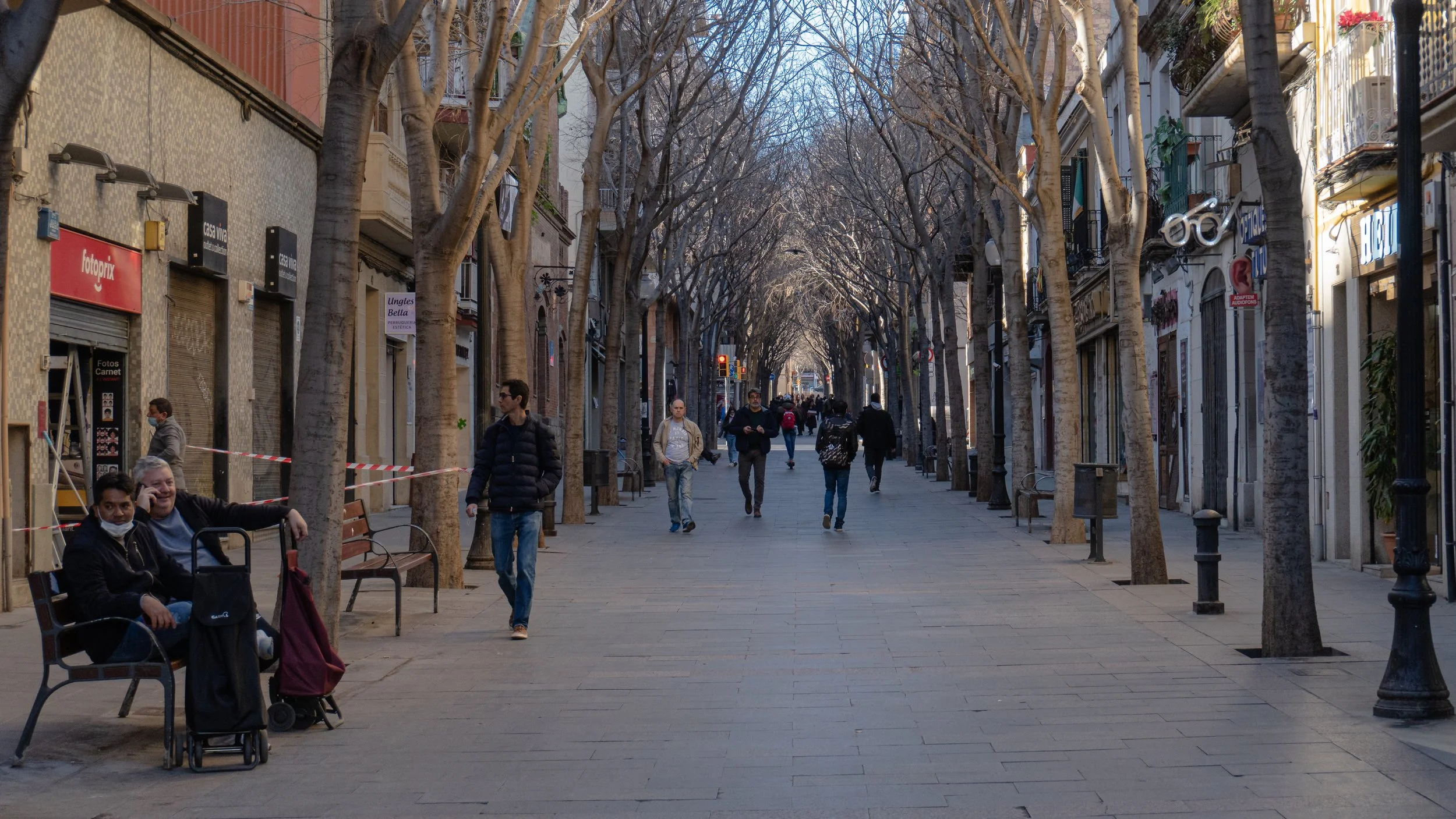
And that has led me to reflect.
I remember when my mother told me we were moving back to Caracas. I remember the last argument we had in the living room of the rented flat in El Clot. I remember my anger because, in the middle of adolescence, the news felt like the end of the world. I remember starting secondary school in a new country, with new classmates calling each other “marica” while I still called everyone “tía.” I remember how confusing socialising felt because it seemed like we came from completely different worlds — and maybe we did.
For a long time, I thought I belonged neither here nor there. But I also know that, one day, without even realising it, I adapted. I replaced “tía” with “marica,” and my music taste expanded enough to fit El Canto del Loco and Estopa alongside Daddy Yankee and Caramelos de Cianuro on the same iPod. It was not the end of the world after all.
“Eleven years later, I know emigrating again is not the end of the world either. In fact, it feels like the beginning of many things, and perhaps that is why I have changed countries three times in a single year.”
I have grown used to carrying my life in a suitcase, though this time I feel more “from over there.” I have El Ávila tattooed on my left foot — literally — because I believe people always belong to where they come from. But I do not understand the memes my cousins share, nor the local jokes my friends make based on social references I never experienced. At the same time, it still makes me genuinely happy when someone invites me to a cold Polar beer and an empanada, and I discovered that the best Venezuelan restaurant in Barcelona is called Choroní.
The nostalgia for the life I left behind in Caracas follows me everywhere: the people I love, familiar routines, the December light entering through the kitchen window, even the problems. There is a silent trauma and a certain dark humour that are difficult to explain to people who have never lived through a nationwide blackout, constant violence, empty supermarket shelves, or the feeling of a country changing in real time.
Venezuela also leaves me with the certainty that the country I left behind will not be the country I find when I return, because it is constantly transforming.
I also know there are expressions that will never leave me. My grandmother lived in Venezuela for more than sixty years and never lost her Spanish accent, yet she embraced Caracas as her city. She arrived with her husband and one daughter, built a life there, and had two more children. She worked as a nurse at the Children’s Hospital until retirement. At home we ate Spanish dishes, and she never learned to make arepas, though she loved when someone made them for her. On 24 December we ate hallacas, but on 25 December lunch was stuffed eggs and cannelloni.
Every afternoon she sat on the balcony praying, enjoying the view of El Ávila with the same intensity as every Caraqueño does. She lived almost a hundred years, and everyone in Santa Mónica knew her. The butcher on the corner served her for decades and still knows I am Aurora’s granddaughter. The same thing happens at the pharmacy, at the kiosk where she bought eggs, at the dry cleaner’s. She died in Caracas and we buried her next to my grandfather in Cementerio del Este.
I suppose the version of myself that arrived in Barcelona at nine years old would tell me not to worry, because with time we adapt and add small fragments to our identity.
I am fortunate to have grown up between two countries and to have learned that I can keep moving through life with everything packed into a suitcase.
I know Venezuela will always be there whenever we want to return, even if the people we love become scattered around the world. And the rest of the world will always be there for us to continue moving, exploring, and adapting.
Today I am a foreigner in the streets where I grew up, but I know that feeling will not last forever.
